TikTok Shop product image size and requirements for clothing (2026)
Published 2026-11-01
On TikTok Shop, your product images sit right under the video that sent the shopper there, so they have to confirm what the video showed. This page collects TikTok Shop's image rules from its own Seller University (US pages), quoted with the date we checked them, and explains what they mean for clothing. We make NotShot, an AI on-model photo tool, so we also cover TikTok's rules for AI-generated product images, including where they limit what AI should do.
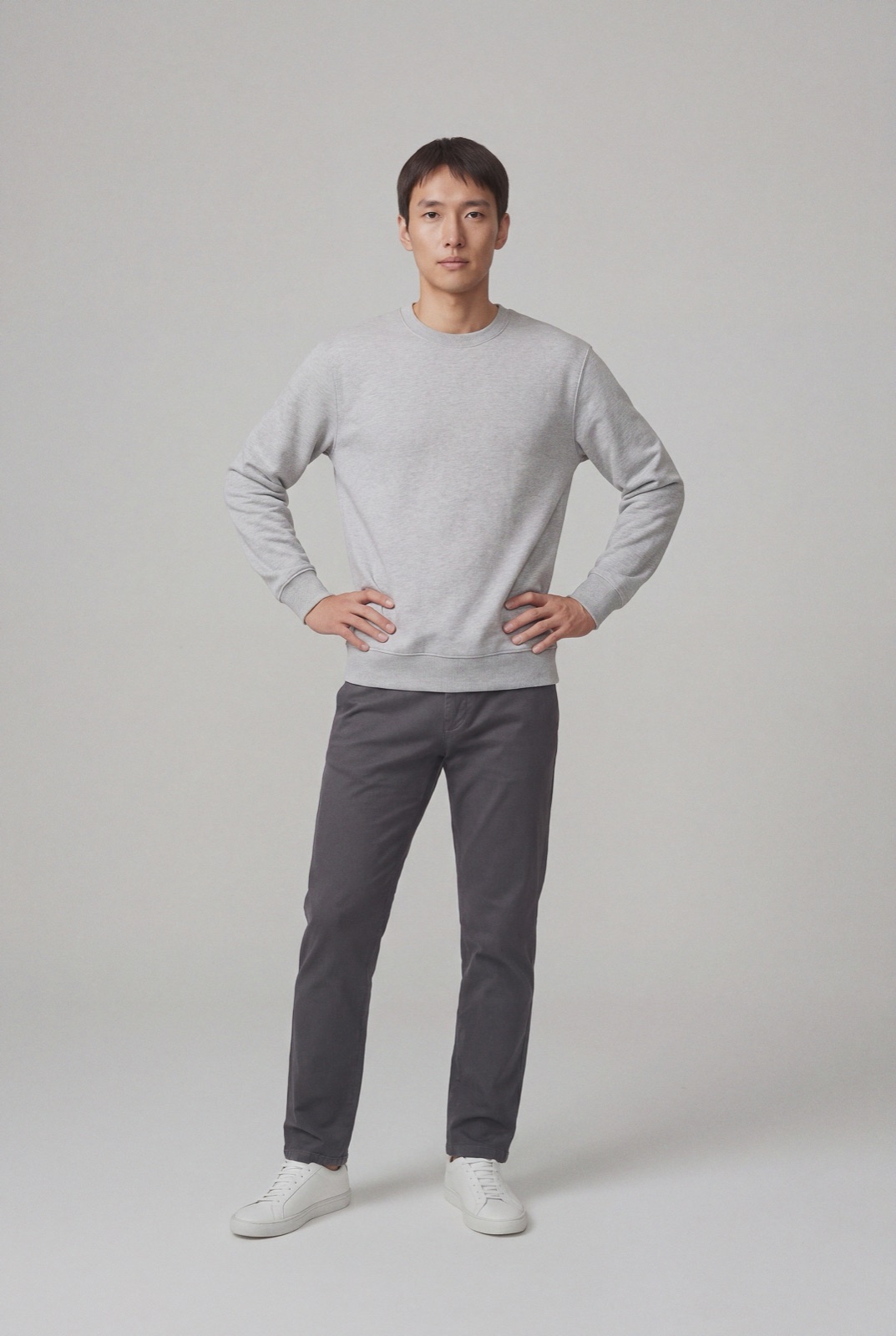
An on-model render made with NotShot. On TikTok Shop, the main image needs a pure white background; on-model shots belong in the additional images.
Minimum size: every product image must be at least 600 x 600 pixels.
Ratio: up to 9 square images per product. The help page recommends 1:1 and says images between 3:4 and 4:3 can still be uploaded. The bulk listing tool adds white borders to images outside that range.
Count: at least 1 image, at most 9.
Files: JPG, JPEG or PNG, up to 10MB each.
Color: images must be in color. Black and white images are not accepted.
600 x 600 is the floor, not a target. For clothing, export square images well above it, such as 1200 x 1200 pixels, so fabric texture holds up when shoppers zoom. That is our suggestion, not a TikTok number. For a long dress or a full outfit, leave space above and below the figure when you shoot so the square crop doesn't cut off the hem.
Main image rules
From the same listing policy (checked 1 November 2026):
One image must be selected as the main product image, and it must show the front physical view of the product.
The main image must have a pure white background and be an objective and straightforward representation of the product for sale.
No product image may include added logos, text, borders, watermarks, or graphics covering the product or in the background.
Images must include only what the customer will receive.
TikTok's Product Detail Pages and Listing Quality Guidelines (checked 1 November 2026) add that the main image must not use any staging with multiple product variants, and must not carry promotion stickers. For clothing, that means one colorway on white in the first slot, without the jacket, bag or belt you don't sell with it.
The other 8 images
The listing policy says additional images must show the front, back, sides and other details, and may show key features, usage scenarios, variations, styled scenes, close-ups and size comparisons. Multiple images showing the same angle are not allowed. Placeholders and digital renderings of a product are not allowed.
The quality guidelines go further for wearable products. Under Model Display, TikTok says a listing should include at least one image featuring a real human model wearing the product, with varied poses (front, back, side), a real-life context, and it advises: avoid relying exclusively on flat-lay, ghost mannequin, or hanger-only images without any on-body demonstration. If your clothing listings today are flat lays only, that is the gap to close first.
What TikTok says about AI-generated product images
TikTok has a dedicated policy, AI-Generated Content Restrictions and Requirements for Product Listings Images (dated 24 September 2026, US, checked 1 November 2026). It says the goal is not to discourage AI-generated content entirely, but to prevent product displays that don't match the product being sold. AIGC is allowed when it accurately represents the real product. Sellers must not use AI to change the size, color, material or shape of a product, show features it doesn't have, show unsupported accessories, or make it look more premium or different than it really is. TikTok may take enforcement action against AI images that break these rules.
Read together with the listing policy, the practical rules for clothing are:
Start from a real photo of the actual garment. The listing policy bans digital renderings of a product, so an image generated from a text prompt alone is out.
Check every AI image for color, print, fabric and cut against the garment you ship. A color shift is exactly the kind of change the AIGC policy forbids.
Keep at least one real photo of the product in the set, and note that TikTok's quality guideline names a real human model for the on-body image. If a listing's quality score matters to you, a real on-model photo is the safe way to meet that line.
A 9-image set for clothing on TikTok Shop
Main image: the garment, front view, on pure white, one colorway, nothing else in frame.
Back view of the garment.
On-body front showing fit and length.
On-body side or back, a different angle from image 3.
Styled or lifestyle shot, without accessories that look included if they aren't.
Fabric close-up showing texture and true color.
Detail close-up: closures, print, stitching or label.
Measurement shot: a tape across the chest, waist or length. Put the size chart in the listing fields, not on an image, since added text isn't allowed.
Other colorways, if they are variants of the same listing.
TikTok wants on-body images for clothing, and AI images that match the real product. NotShot renders your garment on your own model from the product photo you already have, so the input is always a photo of the actual garment. Every render is checked by an AI judge that compares it with your upload for color, print and cut, which is the accuracy TikTok's AIGC policy asks for. Renders below the quality bar are refunded automatically, so you pay for photos that pass the check, not for attempts. Plans are on the pricing page.
Questions we get asked
What size should TikTok Shop product images be?
TikTok Shop's US product listing policy says all product images must be at least 600 x 600 pixels, square, as JPG, JPEG or PNG files of up to 10MB. A square export well above the minimum, such as 1200 x 1200 pixels, leaves room for zoom. Checked on TikTok Shop Seller University on 1 November 2026.
What aspect ratio does TikTok Shop use for product images?
1:1. The listing policy allows up to 9 square images per product. TikTok's help page says images between 3:4 and 4:3 can still be uploaded, but 1:1 is recommended, and the bulk listing tool adds white borders to images outside that range.
Does the TikTok Shop main image need a white background?
Yes. The US product listing policy says the main image must have a pure white background, show the front physical view of the product and include no added logos, text, borders or watermarks.
Can I use AI-generated product images on TikTok Shop?
Yes, if they accurately represent the real product. TikTok's AIGC policy for listing images, dated 24 September 2026, says AI must not change a product's size, color, material, shape or features. The listing policy also bans digital renderings, so start from a real photo of the garment. NotShot's AI judge checks every render against your upload for color, print and cut.
NotShot is a Berlin-based tool for on-model product photography without the photoshoot. Try NotShot